

For one misunderstood reason or another, Chicago has always been on the fringed outskirts of hip-hop for the genre’s entire existence. Sure, there are scores of hip-hop enthusiasts running around the city, including well known lyricists like Pugz Atomz and Booda Blaou rotating in cyphers around spots in Cook County. Out of that number only a handful have been able to achieve any success commercially and maintain the same career longevity like artists from New York or Los Angeles. One of the last on that short list of lyricists is Lupe Fiasco, a native of the Windy City whose entire hip-hop presence in the music industry burned out faster than a comet coming into the earth’s atmosphere.
Lupe Fiasco’s debut album Food and Liquor put him on the map in part to the lead single Kick, Push, a whimsical nerdish type cut about a black skateboarder from the hood that transitioned into adulthood and freedom from his impoverished circumstances rolling around the nasty pothole driven sidewalks and streets Chicago has to offer. The song, which is a sample of Celeste Legaspi’s Magtaksil Man Ikaw (Bolero Medley), shot off like a firecracker from every sound system the 2006 spring and summer seasons in Chicago. Kick, Push was breaking stereotypes and preconceived notions about our tribe, making it cool to rap intelligently and tell storie0s about Black kids into social activities considered to be of a white nature (such as skateboarding) that were not socially acceptable in the hood. I, and others like me, were rooting for Lupe Fisco to take hip-hop in that intelligent direction and put Chicago on the map for it.
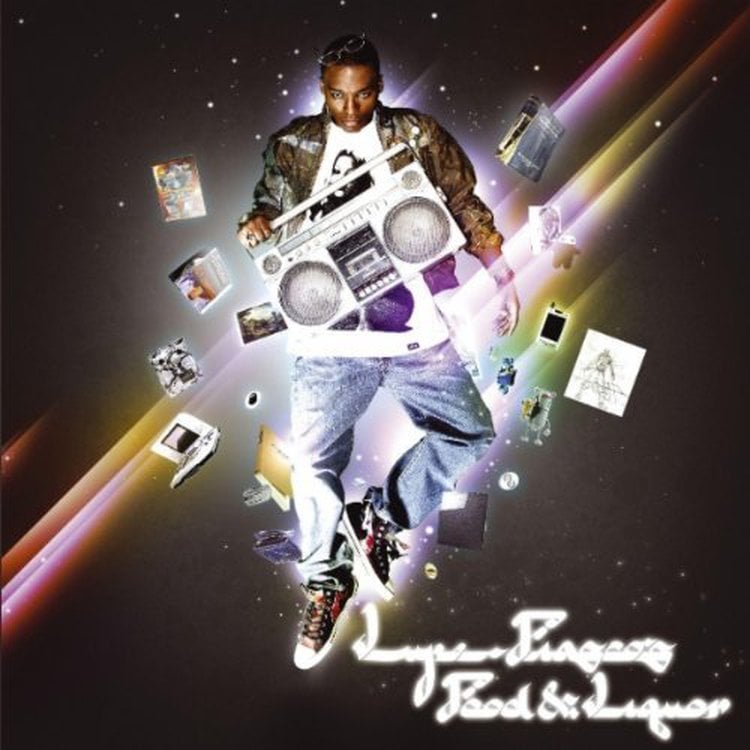
After Food and Liquor was released, that vision quickly became a dream deterred.
Outside of Kick, Push, Food and Liquor is an imitation avant-garde hip-hop effort consisting of a collection of thoughts off the top of Lupe Fiasco’s head that fall in the middle ground of incoherent ramblings and off the cuff lyrical battle rap chocked full of pronunciation changes that impersonate rhyme scheme. While the album impersonates a deeply profound conceptual musical experience with a structure, abstract lyricism combined with nine producers badly clashing in sound and approach leave Food and Liquor struggling to prove its more than half done demo cuts and vaulted throwaway tracks more fit for a mixtape sold from the gutter than an official release.
Don’t get it twisted, Food and Liquor does make many attempts to be creative within the hip-hop cypher, mostly through its unique usage of rare interpolations from unknown old school cuts that should highlight its fresh approach of hip-hop production in a time of cost prohibitive samples. However, in many cases the music bed of which Lupe Fiasco’s unorthodox lyrics rests on are mediocre at best, filled with recreated riffs that sound like they were composed on a Casio keyboard bought from Radio Shack without the benefit of good mixing and mastering to make them sound polished, professional, and memorable. For a lyricist that produced a track where he says he has to give us something Real (featuring Sarah Green), the drastically different musical takes makes it evident Lupe Fiasco does not have a signature style nor is adaptable should the need arise.
Try as he might, Just Might Be Okay is more wishful thinking that concrete facts.
Many will embrace this album as a standout hip-hop album, and considering the hip-hop climate in 2006 it is. However, Food and Liquor is an infamous one hit wonder, filled with ideas that don’t realize their full potential. Half of the album is filled with fire beats paired with inappropriate lyrics that don’t pair well in the vibe of a good marriage between words and sounds. Just Might Be Okay, Sunshine, The Cool, Pressure, and The Emperor’s Soundtrack are fire cuts that go hard in the paint but are hindered by Lupe Fiasco’s weak lyrical delivery (which goes in an out of imitating the worst unintentional impersonation of Kanye West on wax) and ability to read the room and write appropriate subject matter that matches the energy of the track. Just Might Be Okay is too busy compositionally to be a great lyrical track; Sunshine lyrically should have traded places with Daydreamin’ since the sappy premonition of lame love that doesn’t get past the like stage does the beat any justice. Even Pressure can’t deliver on its promise, and comes off as inauthentic as The Cool, failing to give the listeners what the title suggests.
The other half of the album are filled with tracks that are out of place and throw off what equilibrium Kick, Push gave it. Kick, Push II is abysmally abominable, filled with canned beat production and a boringly grittier jumbled synopsis that makes a mockery of its source material. He Say, She Say is a decent cut with a decent sample that should have been used for Kick, Push II, especially since its in the same vein, but was wasted on mumble mouth drivel about a boy trying to become a man but is quickly lost in interpretation. I Gotcha is not Pharell’s finest moment as a producer, with an off the beaten path composition that can get a head nod on the verse but falls off with the chorus ever done on a serious hip-hop song. The Instrumental and American Terrorist comes off abstract and out of place like 2Pac’s Changes, and struggles to find its roots without sounding amateurish, gimmicky, and lyrically artificial.
Despite being certified gold and being put by default on the 1001 Hip Hop Albums To Listen To Before You die list, Food and Liquor falls flat as a definitive genre album that ages like fine wine. Sixteen years after its release its staler than a can of Vienna sausage and Zesta crackers from 1978. The nineteen track release comes across as an experimental album lost in translation, spending way too long flip flopping between uncomplimentary styles and musical genres that strays from the promise and excitement of Kick, Push. There is no single fault that makes Food and Liquor not live up to its greatness, but too many producer hands in the kitchen are definitely a focal point into Lupe Fiasco’s lyrical lack of focus on staying on his subject matter and contribute heavily to word salad ramblings that plague the release.
Lupe Fiasco needs to make better choices on his Food and Liquor selections.
