

Chicago and hip hop have never had a close connection. Sure, we had a few folks at one time or another like Farrakhan Khalid Muhammad (also known as Farrah Gray) get something going with Chi-Rock Entertainment back in the day or even Common (who was Common Sense then) try and merge the gritty hip hop lifestyle to Chicago’s sensibilities but overall Chicago never had a hip hop movement. Our movement was house music and within that a brief period of hip hop house (thanks to Fast Eddie) that turned a few folks onto it. Our radio stations really didn’t play the gauntlet of what was available like NYC or other eastern seaboard cities did for their market. It wasn’t something you heard blasting out of trunk.
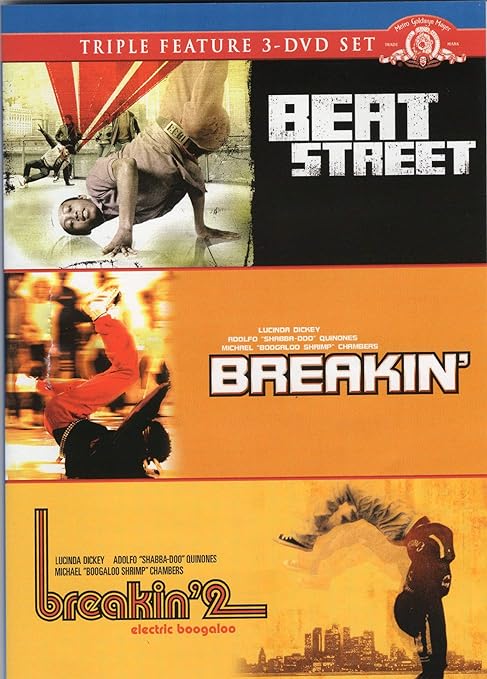
As a music lover that discovered a lot of the hip hop genre through the Box (Music Television You Control), MTV, VH1 (when it didn’t have to share a channel with Comedy Central), and BET (via Rap City and Video Soul) going into my teen years, I have always felt my hip hop knowledge was always a step to the side. Gangster rap had Chicago’s attention for the most part by the time I was a teenager. The hip hop that was peddled in Chicago stores and radio in the 1980s was brought to us in part by Beat Street, Breakin’, Breakin’ 2 Electric Boogaloo. (Honorable mention goes out to Krush Groove, which is a hip hop classic I did not get the privilege to see until I was well into college).
Chicago radio, for whatever reason, resisted anything not rooted in house or stepping, so outside of Doug Banks and Bonnie DeShong’s Coke Top Nine at Nine and maybe a spin here or there on WKKC-FM 88.9, it was very hard to catch some real visceral hip hop. Even then, what was served up to the listening audience was lukewarm, pop mess that In Living Color couldn’t wait to spoof for laughs. Forget about that really real bump in the trunk mad lyricist coming at you with an entire dictionary; for the most part we got the catchy dance stuff like MC Hammer Can’t Touch This type of commercial hip hop.
Picture it, the first rapper I ever saw on a film was Ice-T on Breakin’. The first rappers I saw on television were Run DMC on 227, who barely performed a verse of Mary Mary. The first music video that I can remember seeing that struck in my brain was DJ Jazzy Jeff and the Fresh Prince’s Parents Just Don’t Understand, which still sticks out to me because of my obsession of trying to read all the tagged words on their abstract video set. Lastly, the first rapper I ever heard banging out of my red My First Sony baby boombox with the one speaker was Vanilla Ice, who was blowing up at the time with Ice Ice Baby. It wasn’t until I was in high school and really got to rotate in the hands of Pink House (may he rest in power), that I have more selection in hip hop choices.
The Cypher of Articulate Madness is a portal of my nostalgia of hip hop from a very limited exposure of my youth, a love letter to the wonderful albums I’ve found from high school onward well after the fact of their popularity. Today hip hop is used erroneously in 95% of the conversations that discuss rap music in general, with many having collective amnesia on what hip hop actually used to be versus the intelligible mumbling lack of vocabulary music that it somehow morphed into. All the albums and singles reviewed here are the most memorable of my life, those that I felt are a bit lost to time outside of the hip hop heads and purists that reverently hold onto them in their collective consciousness, refusing to release them to the amnesia of the population that has neglected to remember them.
Here is my contribution to the war effort of keeping hip hop as a powerful positive force alive and well for the next generation to discover, articulate madness style.
