

Gil Scott Heron’s emotional exploration of his Black collegiate experience
Once upon a time there was a complicated man straight out of America by way of Chicago called Gil Scott Heron (a.k.a. Brother Gil for those not in the know) whoa poetically militant musician and composer. Brother Gil was that dude – the dude that had his problems but always brought America’s sins to the forefront in his own unique way. However, before Brother Gil brought us the tales from the forgotten ghetto or the sermon on his mount about Ronnie Raygun, he was a college kid figuring it all out at Lincoln University, trying to follow in the footsteps of his favorite poet and alumnus Langston Hughes.
According to lore, Brother Gil hated Lincoln University though he chose to attend of his own volition. And while there decided he wasn’t going to finish. Instead, he decided to hole up in his room, cut all his classes, and spend what time he had left there writing novels, hoping to get a publishing deal right as he got kicked out. And that’s what he did, with one of those two novels being The Nigger Factory.
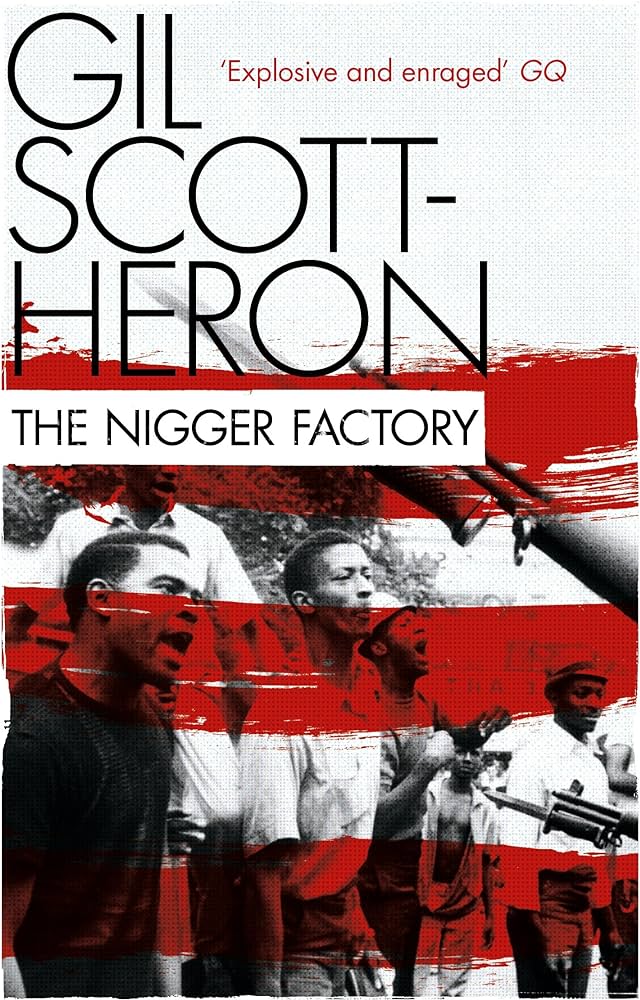
Now let’s get down to clown with this interesting perspective of college life by an active collegiate.
The Nigger Factory takes place on the predominately Black campus of Sutton University (which is pretty much identical to the Lincoln University Gil Scott Heron was experiencing). It’s still relatively the beginning of the school year, fall semester, and some factions of the Black student population are pissed off with the bullshit they have to live, eat, and shit on campus. Here we are introduced to transfer student Earl Thomas, a cat that has his head on straight and is a great political mover and shaker. He’s more of a straight laced Black dude, working a job, living off campus in a boarding house to supplement his partial scholarship, and newly elected president of the Student Government Association for his even tempered ideas of campus change. As part of his election mandate, he promised to bring about a list of student demands bringing down their collegiate experience to Ogden Calhoun (who is disdainfully called Head Nigger by the students), a no-nonsense University administrator that does it his way or no way at all.
Thomas’ goal of getting the demands together are soon thwarted by former running mate of the SGA he defeated Ralph Baker and his MJUMBE organization, comprised of fraternity members and athletes. The quasi militant group takes it upon themselves to brand him an Uncle Tom, steal his ideas and jumps the gun demanding immediate change via radicalism, dragging him in without giving him any options of avoidance. This launches a domino effect of emotions fully provoked by MJUMBE calling the national press and escalating things beyond Baker’s control. All roads culminate in Thomas trying to get faculty support to their cause while MJUMBE falls apart as some members use violence to escalate their points due to their own prejudices. In the end Calhoun calls their bluff and shuts the school down solely to expel them all, but both Thomas’ acolytes and MJUMBE decide to stay and force his hand to remove them from campus, scholarships and senior years be damned. What happens by the end is a complete breakdown of 2Pac’s infamous Thug Life mantra – the hate you give little infants fucks everyone.
For one of two novels that Brother Gil wrote in a year, this isn’t bad for what it represents.
The Nigger Factory is an uncompromised expose of the turbulent times of Black student activism in the 1960s, a topic not well documented during the war demonstrations and other student led protests and seizures. Class divisions and their influencing politics are on display, as Sutton University stands a testing ground as a proverbial nigger factory churning out various types of tokens and turncoats, militants and passive aggressive slaves. It is genius in its look at the past and present, specifically in the Ogden character, and how classism and racial divides can turn the most militant in a group into the biggest sell out if given collegiate time, effort, and opportunity of advancement.
Is it dated in his jargon, hell fucking yes. Going with the Black slang speech for dialogue makes it even harder to read. Is it a lot of long winded filler, absolutely, but I believe that reason stems from Brother Gil wanting the readers to know every single solitary thing about the emotional state of his characters in their personal life and how that influenced their political actions, all while maintaining his subtle point that higher education in his time failed to create a Black Americans that could maintain their culture without being whitewashed. His disdain for the collegiate system is on full parade as well, from his foreword to his candid portrayal of the administration and faculty of all races.
If you dig Brother Gil’s Winter In America or From South Africa To South Carolina album, then The Nigger Factory is your jam right here. If you’re interested in Black student politics, this is your jam right here. So I’d say read it because it was a novel that was so committed to that the author dropped out of school essentially to write it and followed through and got it published on a indie imprint. There’s a lesson to be had in that all by itself, but it does go to show you that event he most non-market fringed political book can find an audience.
