

Real hip-hop, as most of us 1980s kids remember it, was all about truth. Rhythm and rhyme were the landscape to our adolescence, a soundtrack of an imperfect innocence mired in the harsh realities of living in a concrete jungle. In the early 1990s that was our disco, our four to the floor tempo. At the root of it all was the energy of expression, the breath of air where you would be doing the running man looking for the perfect beat while in the center of political activism hidden in plain sight.
Arrested Development came right in and fit all of the above, giving us catchy rhyme schemes and effervescent lyricism that spoke of the harsh conditions in forgotten corners of America. Their rise was unprecedented and in some cases misunderstood; hip-hop at that point of their entry had never embraced alternative stylings that didn’t meet the standards of street materialism. Somehow at the apex of gangster rap where rappers were expected to have an NWA type of street attitude with no moral compass, Arrested Development came through with a hippie style and rural sensibility that fit into the mold of a changing music scene like a hand on a glove.
The Grammy Award winning hip-hop collective that Rolling Stone magazine named band of the year in 1992 blitzed into the scene like a beautiful comet entering the musical atmosphere, leaving its beauty in its path, and quickly vanished from public view in the blink of an eye. The American recording industry forgot them as fast as they handed them awards, unpleased with the group’s personal moral vision to make music that spoke to the social conditions they wished to expound upon. In an industry where fame and money changes people into caricatures, Arrested Development stayed true to its roots and remained humble and unmoved from the trappings of the ever growing façade of gangster rap rooted in sex and violence. Refusing to fall into the pits of moral turpitude they continued onward; media backlash to the song Mr. Wendel was the peak of the band’s commerciality and airplay leading Arrested Development into banished from radio, ignored on video music channels, and left in the underground as a cult artist easy to find if a real hip-hop aficionado knew where to look.
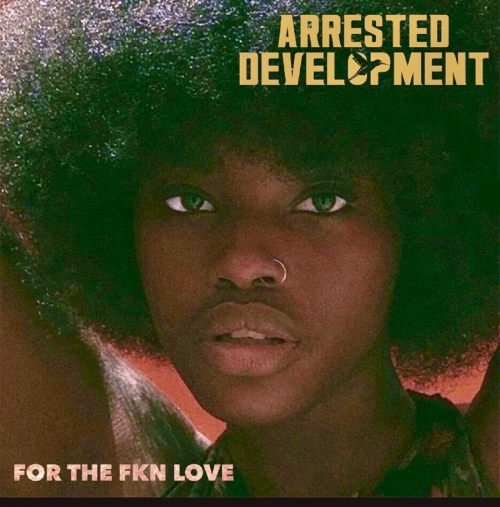
After more than twenty years releasing music their way and on their own terms their latest outing For The FKN Love, a seventeen track independent release (produced by UK legendary producer Configa) is a labor of love project that culminates the group’s struggles and hardships, celebrations and triumphs together over the last three decades. For hip-hop heads that long of another mind blowing album like Dead Prez’ triumphant Let’s Get Free, For The FKN Love is the much needed injection of classic hip-hop intermixed with the maturity of life, age, and loss that still speaks to the hip-hop heads in the conscious language that feeds their soul. It is an album that is virtually ignored by the industry, and rightfully so, since its mere subject matter is a complete contrast to the corporatized structure that has decimated the economy and driven a cycle of violence rooted in poverty that is over glorified in all facets of media.
In what very well may be the band’s last record together as a collective, For The FKN Love is a potential proper sendoff that lets us know that hip-hop is not another northern soul niche, it is not a niche genre relegated to 1984, and that it is more influential and needed more now than ever to tell the real stories of adults trying to make it instead of YOLOing through life. Relevant, reflective, introspective, and revolutionary in a time where contemporary rap via the trap genre is still glorifying sex, drugs, and violent lifestyles directed towards Black Americans, Arrested Development have conceptualized and created an album filled with a roster of classic hip-hop legends that brings music back to the days of hip-hop happiness for those that need stimulation of the real without any interjection of social media influencers.
Ant that is a good thing.
As Arrested Development celebrates having a critically acclaimed album, the recording community in America ignorant of its release has condemned it to a commercial failure for not being gimmicky enough to sell poor behaviors to impressionable youth. The silent blackballing of For The FKN Love is the uncomfortable arrested development of hip-hop itself, a testament that positive, unapologetic good black music featuring sober fierce lyricists is blatantly ignored by the RIAA. While Arrested Development is beloved overseas, only in America are they shunned and silenced, for there is no radio room of enlightening clouded minds influenced by death daily in their doses of direct music.
